
Freshwater provides a home to many species including phytoplankton, zooplankton, aquatic plant, insect, fish, bird, mammal and others. Aquatic biodiversity are organized from the smallest cell levels to complete ecosystem levels, where genetic diversities and species diversities have a vital role in building communities and populations (Bunn and Arthington, 2002). Aquatic fauna has limitless economic and aesthetic value and is highly responsible for maintaining overall environmental health (Kushwaha et al., 2016).
High dependency on aquatic resources can be observed in the form of direct and indirect services, where humans get benefit as food, medicines, other resources, and various recreational and commercial activities like tourism, fishing, boating, etc. Aquatic diversities also depend upon its aquatic habitat and use it as food resource, covers and breeding grounds (Hartmann et al., 2007).
The Bagmati River is rich on its cultural value. The river flows through the Kathmandu Valley which lies in the Bagmati Province of Nepal. This freshwater river is considered as holy and is taken as the symbol of civilization. Various cultural and traditional ceremonies are being carried out by various religions. Various temples can be observed in the bank of this river. Pashupatinath and Gokarna are some temples at the bank of this river.
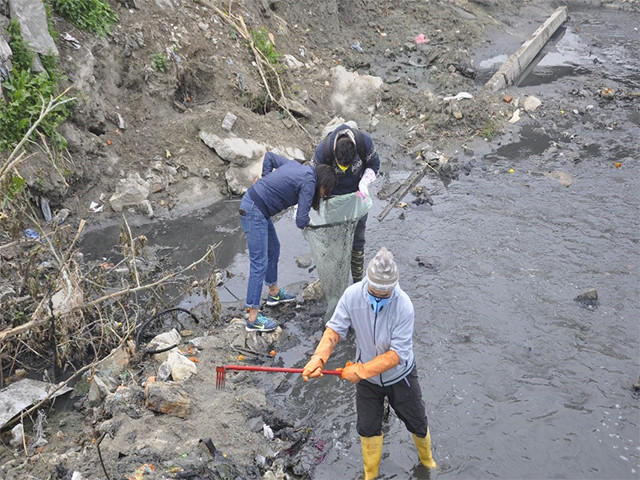
The origin of Bagmati River is taken as a major source drinking water for Kathmandu Valley. The water is being used as a source of irrigation at the upstream of the river (Gyawali, 2001). Moving downwards, disposal of sewage directly into the river can be observed, which has been resulted due to the rapid and unmanaged urbanization. The riverbank encroachments by the people are more frequent than the past. This has resulted into the deterioration on water quality of the river. We could clearly observe the vast differences between the scenario of upstream and downstream of this river. Due to large population of the cities this river is very polluted (The Himalayan Times, 2019). The level of pollution has worst affect on Bagmati, the direct mixing of sewage has converted the river into the black and poisonous form of water (Kumar, 1994). Absence of proper river management plans has also made the river to degrade more. The river’s condition is on intense threat due to various factors. Sand collection for concrete construction is one of the many activities from Bagmati and its tributaries (Gyawali, 2001).
This study has tried to analyze water quality of Bagmati and the presence of freshwater organisms on it. It has attempted to describe how the presence of organisms affected by the quality of river.
Join Our Mission to Save Our EarthA Research Report on Aquatic Animals of Bagmati River, Kathmandu, Nepal
Green Guard Nepal
Green Guard
Special Issue on Asian Elephant
releasing soon